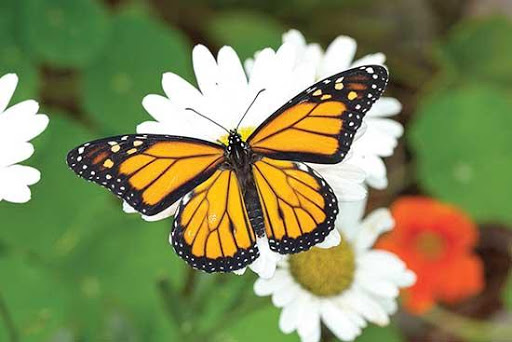
An introduction to an at-risk but one of North America’s iconic species–The Monarch Butterfly.
Author: Quinn Ong
In this post, EPAC will be introducing to you one of to one of North America’s iconic species — The Monarch Butterfly. Sadly, the population of the Monarch Butterfly are in steep delicine.
As a brief introduction, the beautifully-coloured butterfly is summer bred in the southern parts of Canada. They then spend four to five generations migrate to Mexico over winter during the spring migration. In 2016, the Committee for the Status of Endangered Wildlife in Canada (COSEWIC) has officially listed the Monarch Butterfly as endangered.
There are several possible reasons for the decline in population such as the threat of habitat loss, the use of herbicides, pesticides, as well as climate change. There is a strict requirement for Monarch Butterfly to breed as well – milkweed and wildflowers across the breeding range and migration routes.
The efforts of the Canadian Wildlife Federation (CWF) includes restoring meadow habitat, and they have formed a partnership with the National Capital Commission, HydroOne and Lanark County for the restoration process.
Here are some ways you can help the Monarch Butterfly.
Programme Overview
CWF is working to create and restore breeding and feeding habitat for Monarchs and other pollinators along public roadsides and rights-of-way (e.g. hydro-lines and pipelines). Supported by the Ontario Trillium Foundation, we are working on a pilot project with Hydro One, Lanark County and the National Capital Commission (NCC) to create Monarch habitat on rights-of-way in eastern Ontario.
Program Lead

Carolyn Callaghan focuses her work on the conservation of at risk species in Canada. She is passionate in getting to know the conditions that make these species become at risk and then determining how to she can help to reduce the impact of these factors to heal the populations. Her team she works with and Carolyn herself looks for suitable farming practices and business practices on roadways and rights-of-way with the recovery of species at risk. They study a much variety of species that are currently listed under Canada’s Species at Risk Act, including Western Chorus Frog, Monarch Butterfly, and more recently, grassland bird species such as Bobolink and Eastern Meadowlark. Here is a quote from her:
“If we work together to restore meadow habitat in private and public lands, we can make a difference for the recovery of the Monarch Butterfly.”

Holly Bickerton is an ecologist and botanist in Ottawa, and has worked for the conservation of many rare species. Holly and Carolyn Callaghan, CWF’s Senior Conservation Biologist for Terrestrial Wildlife, are working together to build partnerships with corporations and government agencies that maintain vegetation on linear corridors to recover the Monarch Butterfly.

Key Achievements
- 2017: Project begins.
- 2018: Support from Ontario Trillium Foundation obtained, project launched with our partners Hydro One, Lanark County, and the National Capital Commission.
- Five hectares of habitat restoration prepared at four sites.
- 2019: Holding a workshop on restoring habitat for Monarchs and other pollinators for Rights-of-way and roadway managers.
- 2019: seeding sites with native wildflowers begins
If you would like to learn more about the Monarch Butterfly or how you can help conserve this endangered species, head over to https://cwf-fcf.org/en/explore/monarchs/?src=%20ESB for more information.
Hope you learned about The Monarch Butterfly in this blog! Till next time.
References:
Canadian Wildlife Federation. (n.d.). The Monarch Butterfly Retrieved from https://cwf-fcf.org/en/explore/monarchs/?src=%20ESB
Images: Canadian Wildlife Federation
Infographic: Canva.com
 Endangered Public Animals Canada