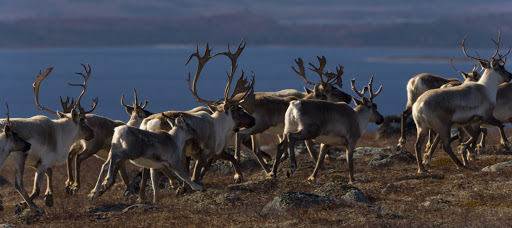
Canada is one of the northern countries where Caribous exist, these animals are considered to be a member of the deer family sharing similarities in appearance to a deer. There are four subspecies of caribou found in Canada “Woodland, Barren-ground, Peary, and Grant’s – each with distinct behavior, form, and distribution”(hww.ca, n.d).
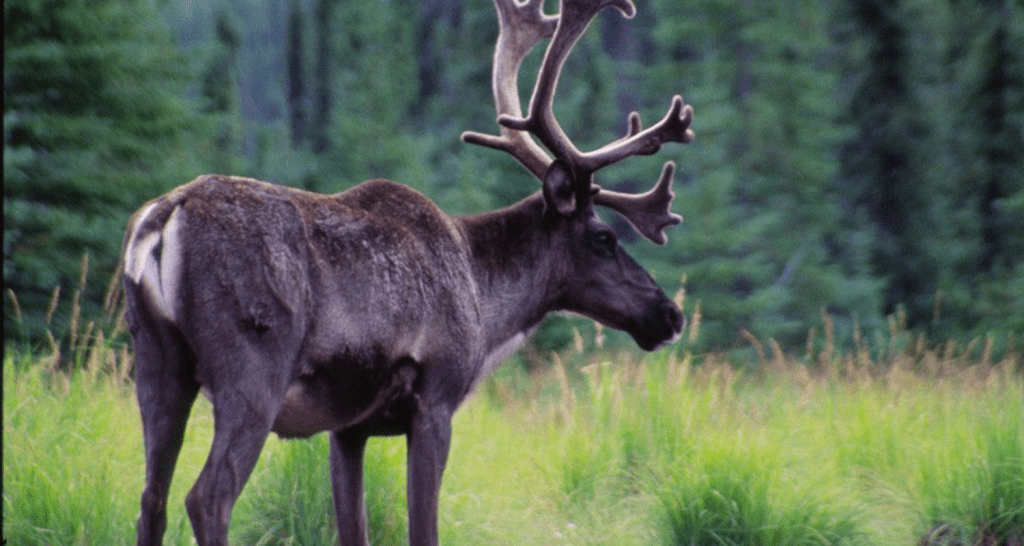
Woodland Caribous are known for having two ecotypes due to their difference in behavioral patterns, “the boreal woodland caribou and the mountain woodland caribou”(hww.ca, n.d).Boreal woodland caribou move around their dynamic boreal forest ranges depending on fire and other disturbance. Boreal populations choose forests at least 60 years old” (hww.ca, n.d), while Mountain woodland caribou “are distinguished by their seasonal migratory behaviour – in winter, they have been known to migrate up to 100 km to foothills conifer forests 80 years or older, and return in summer to higher elevation sub-alpine forests”(hww.ca, n.d).
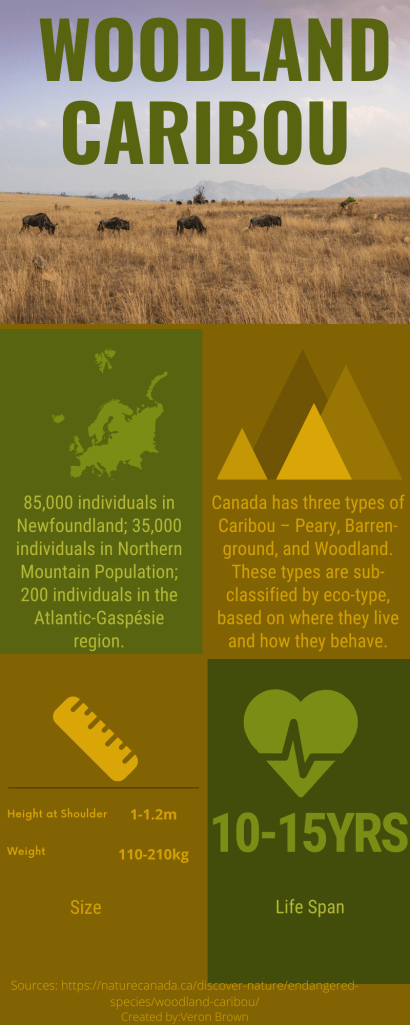
Woodland caribous are “typically 1.0 to 1.2 m tall at the shoulder and weigh between 110 and 210 kg when fully mature”(hww.ca, n.d). That means that a Woodland Caribou size based on height is the average height of a six-year-old child, and based on its weight it is the average weight of 10 six-year-children. From the images above you can see that they have antlers however, the size of their antlers’ varies based on gender, the female has smaller antlers while the male has larger ones. Evenly important is that they both are subject to losing their antlers, the male loses his antlers in the Fall and the female “loses hers later in spring after giving birth to a calf” (hww.ca, n.d). Under the neck you can see that they have a white fur even though their body skin is dark brown, Woodland caribou also have a bobtail as similar to a bulldog. An important fact to remember is that, Woodland caribou also has hooves which in the winter, they “use their hooves to dig through the snow to find lichens and other plants to eat” (hww.ca, n.d). They do this because lichens are their main source of food, “in fact, lichen is such an important food source for a woodland caribou that it makes up 70% of their diet” (hww.ca, n.d).
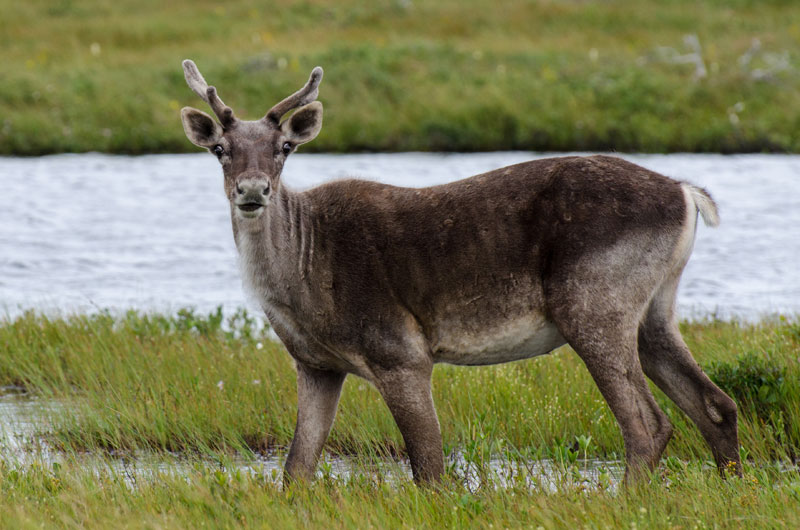
Due to the idea that “Woodland caribou are slow to mature and have relatively low reproductive rates – females are able to breed after 2.5 years and only have one calf per year”, this results in the limited amount of these animals putting them on Canada’s endangered animals’ list. According to Hinterland Who’s Who caribous are expected to live only up to an average of 10 to 15 years which means that female Caribou birth 7 to 12 calves. So, over the next 75 years, one family of female caribou will only birth 30 caribous within 5 generations. These animals are already low in reproduction and to add to that they also have to be aware of their prey which is wolves and also we as human beings through deforestation and the hunting of these animals.
In 2017 “based on limited observations from aerial surveys, the Alberta government provided a rough estimate of at least 2000 caribou in Alberta (Draft Provincial Woodland Caribou Range Plan, 2017)” (albertawilderness.ca, n.d). For the boreal caribous, the Canadian Wildlife Federation is working hard to protect the boreal caribou’s habitat. They are “developing a science-based, land use model to help Canadians and decision makers explore the trade-offs between wildlife conservation, industrial development and economic benefit in the western boreal forest. They are also assisting in the research on boreal caribou habitat, as well as to submitting their own comments and recommendations “for the draft recovery strategy to help ensure a bright future for boreal caribou”.
What can you do?
As caring persons within society, one action that can help as small as it seems if to reduce your own paper and forest product consumption. As well as recycling properly and simply just spreading the word to help bring the awareness of these animals’ struggles. Our partner organization
CWF encourages you to show your support for the boreal caribou and by asking Environment Canada to strengthen the draft recovery strategy. They state that you can do this by simply filling out the form below to submit your comments and sign on to CWF’s key messages to Environment Canada.
If you have any questions about caribou, this draft recovery strategy or what it means, please contact CWF.
Online Sources
Caribou. (n.d.). Retrieved from https://www.hww.ca/en/wildlife/mammals/caribou.html
Albertawilderness. (n.d.). Retrieved from https://albertawilderness.ca/wp-content/uploads/2019/12/20171219_rp_goa_car_draft_rangeplans.pdf
Canadian Wildlife Federation. (n.d.). Retrieved from http://cwf-fcf.org/en/about-cwf/contact-us/
Nature Canada. (n.d.). Retrieved from https://naturecanada.ca/discover-nature/endangered-species/woodland-caribou/
Canva. (n.d.) Retrieved from https://www.canva.com/design/DAD5gLktibA/LfDx7G66sTRcZ0K8hnMzwQ/edit?category=tACFahzNhT4
 Endangered Public Animals Canada